Have you ever turned on your air conditioner, heard it running, and still felt warm air coming from the vents? If so, you’re not alone. Many Florida homeowners experience this problem, especially during hot and humid weather.
Your AC may run for hours without making your home comfortable. Some rooms may feel warm, the airflow may seem weak, or the thermostat may never reach the temperature you selected.
The good news is that some causes are simple to check. A dirty air filter, incorrect thermostat setting, or blocked vent may affect how well your system cools your home. Other problems, such as a frozen coil, refrigerant leak, or faulty compressor, need professional attention.
In this guide, we’ll explain 9 common reasons your AC is running but not cooling, what you can safely check yourself, and when it’s time to contact an HVAC technician.
1. Your Thermostat Settings Are Incorrect
Before checking the AC equipment, start with your thermostat. Sometimes, the problem is as simple as an incorrect setting.
If your thermostat is set to FAN ON instead of AUTO, the indoor fan may continue blowing air even when the system isn’t actively cooling. This can make it feel like your AC is running without producing cold air.
Your thermostat may also be set to HEAT, or the temperature may be set too high.
What you can check:
- Make sure the thermostat is set to COOL.
- Set the temperature a few degrees below the current room temperature.
- If your fan is set to ON, try changing it to AUTO.
- If your thermostat uses batteries, check whether they need replacing.
Give the system some time to respond after changing the settings.
If the thermostat looks correct but your home is still warm, another issue may be preventing your AC from cooling properly.
2. Your Air Filter Is Dirty
A dirty air filter is one of the first things to check when your AC isn’t cooling well.
Your air filter catches dust, pet hair, and other particles before they enter the system. Over time, these particles build up and restrict airflow.
When air cannot move through the system properly, your AC may struggle to cool your home. In some cases, restricted airflow can cause the indoor evaporator coil to freeze.
What you can do:
- Turn off your AC before removing the filter.
- Find the filter using your system’s instructions.
- Check whether it is covered in dust or debris.
- Replace a disposable filter or clean a reusable one according to the manufacturer’s instructions.
Check the recommended filter size and type before buying a replacement. A filter that doesn’t fit properly may allow dust to bypass it.
Florida homes often use AC systems for much of the year, so checking your filter regularly is a good habit. The correct replacement schedule depends on the filter, your household, pets, and how often the system runs.
If the airflow remains weak after replacing a dirty filter, your system may have another problem.
3. Your Outdoor AC Unit Is Blocked or Dirty
Your air conditioner has an indoor section and an outdoor unit. The outdoor condenser releases heat from your home into the outside air.
If the outdoor unit cannot release heat properly, your AC may run without cooling your home effectively.
Leaves, grass clippings, dirt, and other debris can collect around the unit. Plants or objects placed too close to it may also restrict airflow.
What you can check:
- Look for leaves, branches, or other visible debris around the outdoor unit.
- Make sure plants and stored items aren’t blocking airflow.
- Check whether the outdoor unit appears to be operating normally from a safe distance.
Keep the area around the unit clear according to the manufacturer’s clearance recommendations.
Do not open the unit, remove electrical panels, or reach inside to clean the components while the equipment is powered.
If the outdoor unit isn’t running, makes unusual noises, or still appears unable to cool your home, contact an HVAC technician for an inspection.
4. Your Evaporator Coil Is Frozen
It may seem strange, but an AC system can freeze even when the weather outside is very hot.
Your indoor evaporator coil helps absorb heat from the air inside your home. If airflow is restricted or another part of the system isn’t working correctly, ice may form on the coil.
When this happens, the ice blocks airflow and prevents the system from cooling properly.
You may notice:
- Warm air or very weak airflow from the vents.
- Ice on the refrigerant lines or indoor unit.
- Water near the indoor equipment as ice melts.
- An AC system that runs but doesn’t cool the house.
What should you do?
Turn off the cooling system if you suspect the coil is frozen. If your system has a separate fan-only setting, follow the manufacturer’s instructions; otherwise, leave the system off and arrange professional advice.
Never chip away ice or use a sharp tool to remove it.
A dirty filter can cause freezing, but it isn’t the only possible reason. Refrigerant problems, airflow restrictions, or other equipment faults may also be responsible.
An HVAC technician can determine why the coil froze and help prevent the problem from happening again.
5. Your AC May Have a Refrigerant Leak
Refrigerant is the substance that moves heat through your air conditioning system. If the system loses refrigerant because of a leak, it may no longer cool your home properly.
A refrigerant problem can cause symptoms such as:
- Warm air coming from the vents.
- Longer cooling cycles.
- Ice forming on the indoor coil or refrigerant lines.
- Cooling performance that gradually gets worse.
A refrigerant leak cannot be fixed by simply changing the thermostat or replacing the air filter.
Important: Refrigerant should be handled by a qualified HVAC professional. Do not try to open refrigerant lines or add refrigerant yourself.
A technician can inspect the system, identify whether a leak exists, and recommend the appropriate repair. Simply adding refrigerant without addressing a leak may not solve the underlying problem.
If your AC keeps losing cooling performance, professional diagnosis is the best next step.
6. Your Condensate Drain Line Is Clogged
Air conditioners remove moisture from indoor air while cooling your home. That moisture collects as water and normally drains away through a condensate drain line.
In Florida’s humid climate, your AC may remove a significant amount of moisture from the air.
Over time, algae, dirt, and other buildup can block the drain line. Some systems have a safety switch that shuts the AC down when water begins to back up.
You might notice:
- Water around the indoor air handler.
- The AC shutting off unexpectedly.
- A damp area near the equipment.
- Cooling stopping even though the thermostat is still on.
What can you do?
If you see water leaking near electrical equipment, avoid touching the wet area or electrical components. Turn off the system if it is safe to do so and contact a professional.
Do not ignore repeated drain problems. Water can damage nearby floors, walls, ceilings, and other parts of your home.
An HVAC technician can inspect the drainage system, clear the blockage, and check whether the safety switch is working correctly.
7. Your AC Is Not the Right Size for Your Home
Sometimes, the AC runs constantly because it cannot keep up with the home’s cooling needs.
An undersized system may struggle during very hot Florida afternoons, especially when the home has poor insulation, significant sun exposure, or air leakage.
However, a larger AC isn’t always better. An oversized system may cool the home quickly but shut off before removing enough humidity, leaving the house feeling damp or uncomfortable.
The correct system size depends on several factors, including:
- The home’s size and layout.
- Insulation and window performance.
- Sun exposure and air leakage.
- Ductwork condition.
- The number of occupants and other heat sources.
If your AC has struggled to cool your home since it was installed, ask an HVAC professional to assess the system and its cooling load.
Replacing the equipment without identifying the actual problem could lead to unnecessary expense.
8. Your Ductwork Has an Air Leak or Restriction
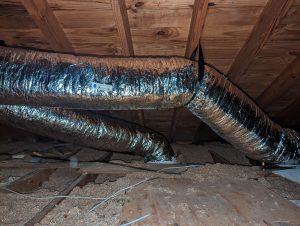
Your ductwork carries cooled air from the AC system to the rooms in your home.
If a duct is disconnected, leaking, crushed, or blocked, some of that cooled air may never reach the rooms where you need it.
This can cause uneven temperatures, weak airflow, or rooms that remain warm while others feel comfortable.
You may notice:
- One bedroom is much warmer than the rest of the house.
- Airflow from certain vents is weaker than usual.
- Your AC runs for long periods without reaching the thermostat setting.
- Some rooms feel uncomfortable even when the system is operating.
What can you check?
Make sure your supply vents and return-air grilles aren’t blocked by furniture, curtains, or other objects.
If several rooms still have poor airflow, the problem may involve ductwork, the blower, or another part of the system.
An HVAC technician can inspect the airflow and ductwork to identify the cause.
Avoid sealing or modifying hidden ducts without understanding the problem first. The correct repair depends on where and why the airflow is being lost.
9. An Electrical or Mechanical Part Has Failed
Your air conditioner depends on several electrical and mechanical components to operate.
A failed capacitor, contactor, fan motor, compressor, or other component may prevent the system from cooling properly.
For example, the indoor fan might run while the outdoor unit fails to operate as it should. You may hear the system running inside but feel only warm air from the vents.
Possible warning signs include:
- The outdoor unit isn’t running when cooling is requested.
- You hear clicking, buzzing, or unusual grinding noises.
- The AC repeatedly switches on and off.
- A breaker trips more than once.
- The system runs but never produces adequate cooling.
Electrical and mechanical problems can be difficult to diagnose without the right tools and training.
Do not open electrical panels, touch exposed wiring, or repeatedly reset a breaker that keeps tripping. If you notice smoke, a burning smell, or signs of electrical overheating, turn off the equipment if you can do so safely and seek qualified assistance.
A professional technician can test the relevant components and explain which repairs are needed.
What Should You Do First When Your AC Isn’t Cooling?
If your air conditioner is running but your home is still warm, follow this simple checklist.
Step 1: Check that your thermostat is set to COOL and the temperature setting is appropriate.
Step 2: Inspect your air filter and replace it if it’s dirty.
Step 3: Make sure the indoor vents and outdoor unit have enough space for airflow.
Step 4: Look for warning signs such as ice, water leaks, unusual noises, or a burning smell. Avoid touching electrical components.
Step 5: If the system still doesn’t cool, turn it off if necessary and arrange a professional inspection.
These checks can help identify simple issues, but they won’t diagnose every AC problem. If you are unsure what to do, it’s safer to leave the equipment alone and contact a qualified technician.
When Should You Call an AC Repair Technician?
Call an HVAC professional if your AC continues blowing warm air after basic checks, freezes repeatedly, leaks water, makes unusual noises, or runs for long periods without cooling your home.
You should also arrange an inspection if the system repeatedly shuts down, the outdoor unit fails to operate, or you suspect a refrigerant leak or mechanical problem.
Don’t wait for a complete breakdown if your home is becoming increasingly hot.
Florida heat can be especially uncomfortable for older adults, young children, and people with certain health conditions. If indoor temperatures become unsafe, move to a cooler location while arranging help.
A technician can inspect your equipment, identify the cause of the problem, explain your repair options, and help you decide on the next steps.
Need AC Repair in South Florida?
If your air conditioner is running but not cooling your home, you don’t have to keep guessing what is wrong.
PRIME AIR CONDITIONING LLC provides air conditioning service for homeowners in its South Florida service area, including Pompano Beach, Boca Raton, Fort Lauderdale, Weston, Sunrise, Coral Springs, and Deerfield Beach.
Whether your AC has weak airflow, struggles to cool your home, freezes up, or develops another cooling problem, the first step is identifying the cause.
Contact PrimeAC1 to discuss your AC issue and arrange a service visit. Let us know what symptoms you are experiencing so we can help you determine the appropriate next step.
Need help with your AC repair in South Florida? Contact PRIME AIR CONDITIONING LLC today to ask about AC repair in your area.
Frequently Asked Questions
Why is my AC running but blowing warm air?
Common causes include incorrect thermostat settings, a dirty air filter, restricted airflow, a frozen evaporator coil, low refrigerant caused by a leak, or a problem with an outdoor unit component. Start with basic checks and contact an HVAC professional if the problem continues.
Should I turn off my AC if it isn’t cooling?
If your AC is blowing warm air continuously, has ice on the coil or refrigerant lines, or is leaking water, it’s generally best to stop cooling and seek professional advice. Turn off the equipment if you notice smoke, a burning smell, or signs of electrical trouble.
Can a dirty air filter stop my AC from cooling?
Yes. A heavily clogged filter can restrict airflow, reduce cooling performance, and contribute to a frozen evaporator coil. Check the filter regularly and replace or clean it according to the manufacturer’s instructions.
Why is my AC running all day in Florida?
Very hot outdoor temperatures, poor insulation, air leaks, restricted airflow, ductwork problems, incorrect equipment sizing, and mechanical faults can all contribute to long cooling cycles. If the system cannot maintain a comfortable temperature, arrange an inspection.
How long should it take for an AC to cool a house?
Cooling time depends on outdoor temperatures, indoor humidity, the home’s size, insulation, equipment capacity, and other factors. There is no single time that applies to every home. If your AC runs for hours without making the home more comfortable, have the system checked.
Can I fix an AC that isn’t cooling myself?
You can safely check the thermostat, inspect the air filter, and make sure vents aren’t blocked. Refrigerant handling, electrical repairs, compressor problems, and other internal equipment repairs should be left to qualified professionals.
When should I replace my AC instead of repairing it?
The decision depends on the system’s age and condition, repair history, energy performance, expected repair costs, and the cost of a suitable replacement. Ask a technician to explain the options before deciding.